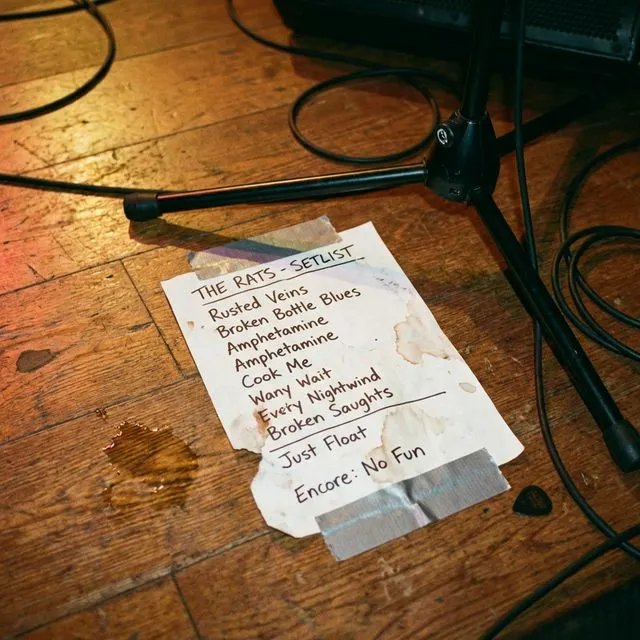
Building the Perfect Setlist: A Guide for Gigging Bands
A great setlist is more than a list of songs. Learn the principles of energy flow, pacing, and audience psychology that separate forgettable sets from unforgettable ones.
Your Setlist Is Your Script
Think of your setlist as the script for your show. The individual songs are important, but the order, pacing, and flow are what turn a collection of songs into an experience.
A band that plays great songs in a random order will always lose to a band that plays good songs in a deliberate order. The audience may not know why one set felt better than the other, but they will feel the difference.
The Energy Arc
Every great setlist follows an energy arc. The specifics vary depending on the gig, but the general shape looks like this:
Open Strong
Your first song sets the tone for the entire set. Choose something confident, energetic, and well-rehearsed. This is not the time for a deep cut or a slow burn. You want to grab the audience immediately.
Build Through the First Third
Keep the energy high through the first few songs. This is where you establish momentum and convince the audience to stay engaged. Stack your crowd-pleasers here.
Create a Valley
Around the middle of your set, bring the energy down intentionally. Play a ballad, an acoustic number, or a slower groove. This serves two purposes: it gives the audience a breather, and it makes the next peak feel bigger by contrast.
Build to the Peak
After the valley, ramp the energy back up. Each song should feel slightly bigger than the last. This is where you put your most explosive, crowd-engaging material.
Close with a Bang
Your last song should be one of the strongest in your repertoire. It is the last impression you leave. Make it count.
Practical Principles
Key Flow
Avoid jarring key changes between adjacent songs. You do not need every transition to be seamless, but jumping from a song in E minor to one in Db major can feel awkward. When possible, group songs in related keys or plan your transitions.
Tempo Variation
Three fast songs in a row can feel exhausting. Three slow songs in a row can feel boring. Mix tempos deliberately. A common pattern is fast-fast-medium-slow-medium-fast-fast.
Instrument Changes
If your guitarist needs to switch instruments or your singer needs to retune, do not put those songs back to back. Build in buffer songs where the transition can happen naturally, or plan for brief audience banter to cover the change.
Read the Room
Build your setlist with flexibility. Mark two or three songs as “optional” that you can add or drop depending on how the audience is responding. If the dance floor is packed, this is not the time for your seven-minute blues jam.
Set Length
Know exactly how long your set needs to be and time it. A common mistake is preparing too much material and rushing through songs, or too little and awkwardly stretching breaks. Aim for your set to come in slightly under the time limit.
Multi-Set Gigs
If you are playing multiple sets with breaks in between, treat each set as its own arc. The first set can be more laid-back as people arrive and settle in. The second set should be your strongest. A third set (if applicable) can be more relaxed as the night winds down.
Start each new set with energy — do not ease in. You need to re-engage the audience after the break.
Managing Your Setlist Digitally
Paper setlists taped to the stage floor work, but they are limited. Digital setlists let you:
- Reorder songs with drag and drop
- Share the setlist with all band members instantly
- Access song notes, lyrics, and section maps from the same screen
- Track which songs you have played at recent gigs to avoid repeating yourself
Gig Friend lets you build setlists directly from your shared song library, assign them to specific gigs, and access everything on stage from your phone or tablet.
One Last Tip
After every gig, take five minutes to note what worked and what did not. Which song killed? Which one fell flat? Where did the energy dip? This feedback loop is how you evolve from building decent setlists to building great ones.
Gig-Friend Team
The Gig-Friend team is dedicated to helping gig economy workers take control of their finances, optimize their workflow, and build sustainable freelance careers.
Related articles
Getting More Gigs: How to Promote Your Band Effectively
Talent alone does not fill your calendar. Learn practical strategies for marketing your band, building relationships with venues, and turning one-off gigs into regular bookings.
The Ultimate Gig Day Checklist for Performing Musicians
Never show up to a gig unprepared again. This comprehensive checklist covers gear, logistics, setlist prep, and everything in between so your show runs smoothly.

How a Setlist Helper App Can Save Your Next Gig
A good setlist helper app does more than list songs in order. It stores your repertoire, shares with your band, displays on stage, and keeps everyone on the same page. Here's what to look for and why it matters.